

Building Ecofeminist Values: The Octagonal Goat Barn at T’ai Farm
By Chandra Laborde, e-flux.com, January, 2026

This just came in from Kelly Hart, whose website, Green Home Building, is a cornucopia on sustainable and planet-friendly building.
(I didn’t even know there were feminist rural collectives in the 1970s.)
This is a kick-ass barn!
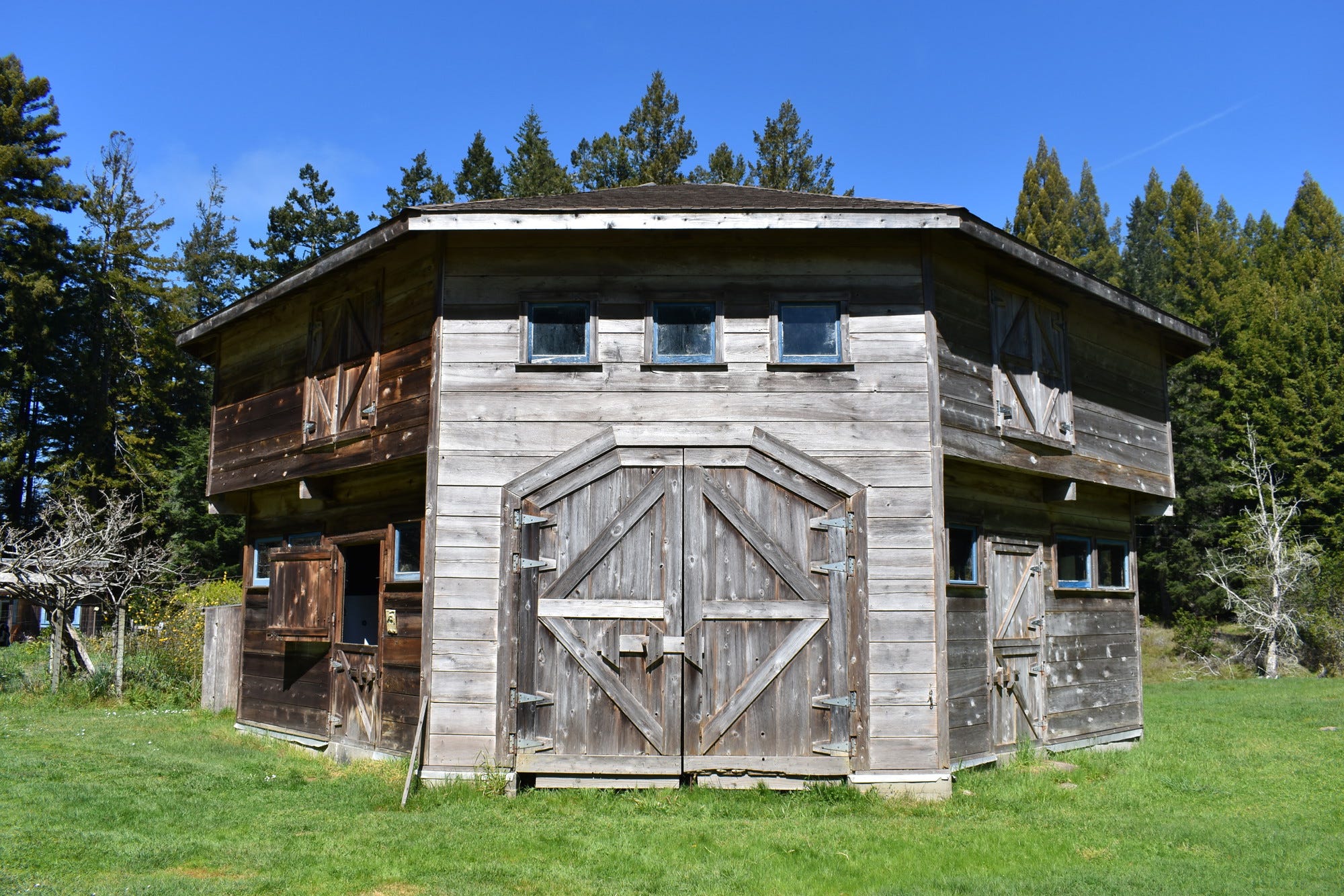
“After driving for more than three hours north on the CA-128 from San Francisco, a winding highway through old-growth redwood groves and densely foggy mountain ranges, the scenery opens to the striking blueness of the Pacific Ocean, picturesque cliffs, and sculptural rock formations. Heading toward Albion Ridge, the “Turtle Time Farm” sign…appears beside the uphill dirt road, amongst small sprawling eucalyptus trees. Turning left, the road leads to the huge cedar barn and ends in an open garden area surrounded by redwood trees, where the turtle-time stillness seems to dissolve past and future. A cat under the blooming trellis arch was the first one to greet me.
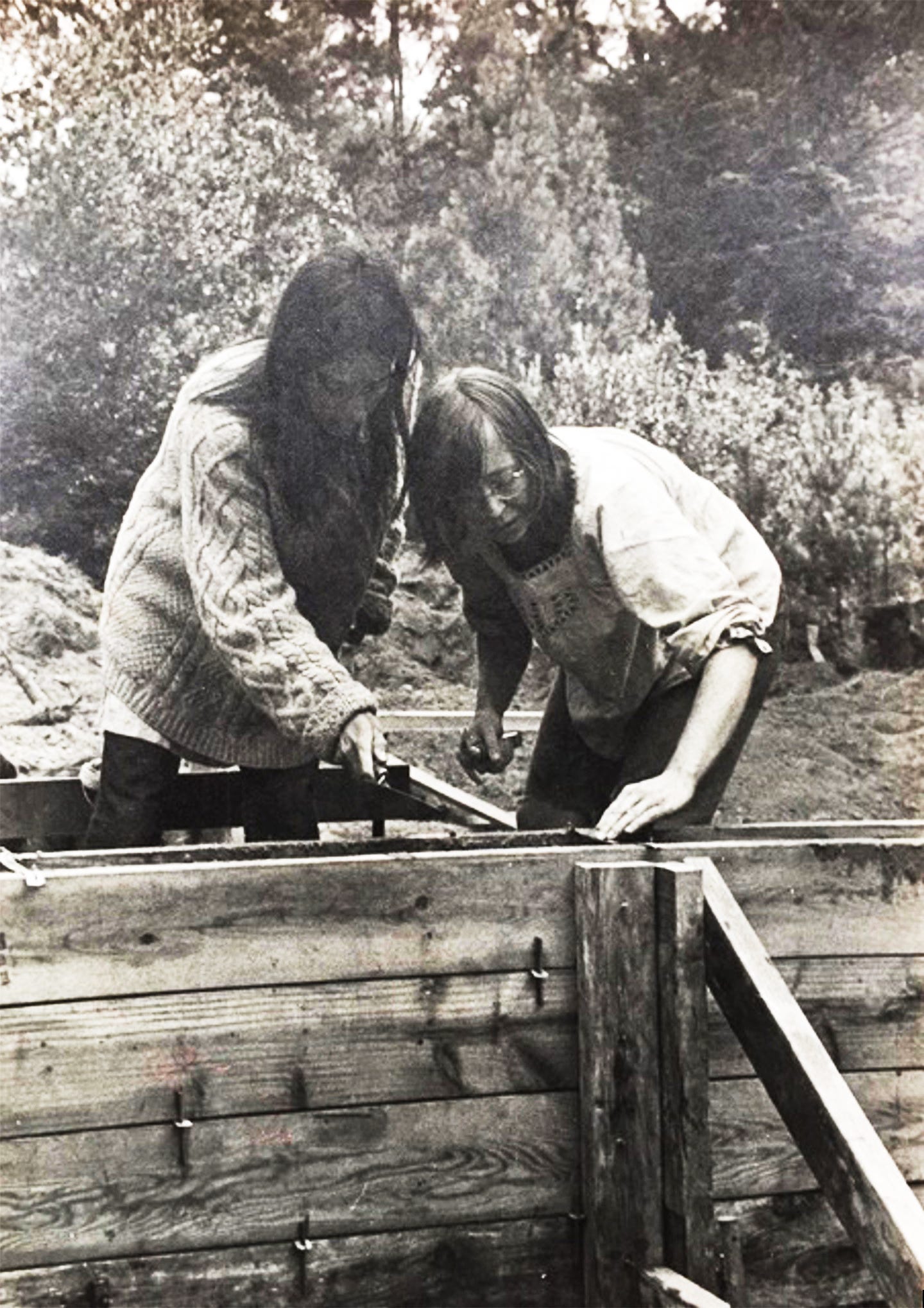
“The massive octagonal barn is much larger and sturdier than I had imagined. I first learned about the farm when I stumbled upon a photograph of women building the barn in a 1978 Mother Jones article a friend shared with me during a conversation about my interest in the architecture of feminist rural collectives from the 1970s.…
“The built environment of Turtle Time Farm, originally named T’ai Farm, embodies the political and ecological values of 1970 feminist intentional communities in Northern California. In this context, the octagonal barn is not only a material structure, but a materialization of the values these women sought to enact in their relationship to the land. The barn exemplifies how feminist collectives used construction as a form of political world-making—challenging dominant architectural norms through ecological design, collective labor, and non-hierarchical spatial forms.
“T’ai Farm is particularly significant because it emerged prior to the more generalized lesbian separatist movement in the United States. The collective did not adhere to a rigid understanding of gender and did not exclude trans women. While many were lesbians, the collective also welcomed women who identified as bisexual and straight.…
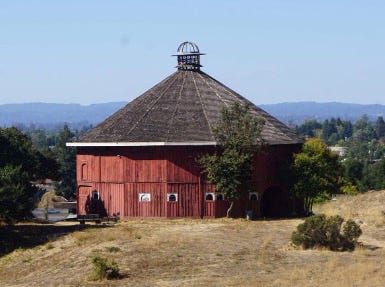
“The idea for the barn’s non-hierarchical shape—which resisted centralized authority both symbolically and in use—came while driving on the highway through Santa Rosa, where they saw an old round barn in Fountaingrove. “Well, that would be such a great way to have a farm!” they said, drawn to the round form’s openness and lack of corners, which contrasted with the directional, enclosed structure of a typical rectangular barn.
They researched Shaker barns and other early utopian spiritual communities and decided they wanted something similar. They reached out to a Bay Area lesbian carpentry collective called the Seven Sisters Construction, who connected them with a Berkeley-based architect named Jean Doke. Doke suggested it would be easier to build the barn as an octagon rather than a circle, and helped them position it for optimal sun exposure.
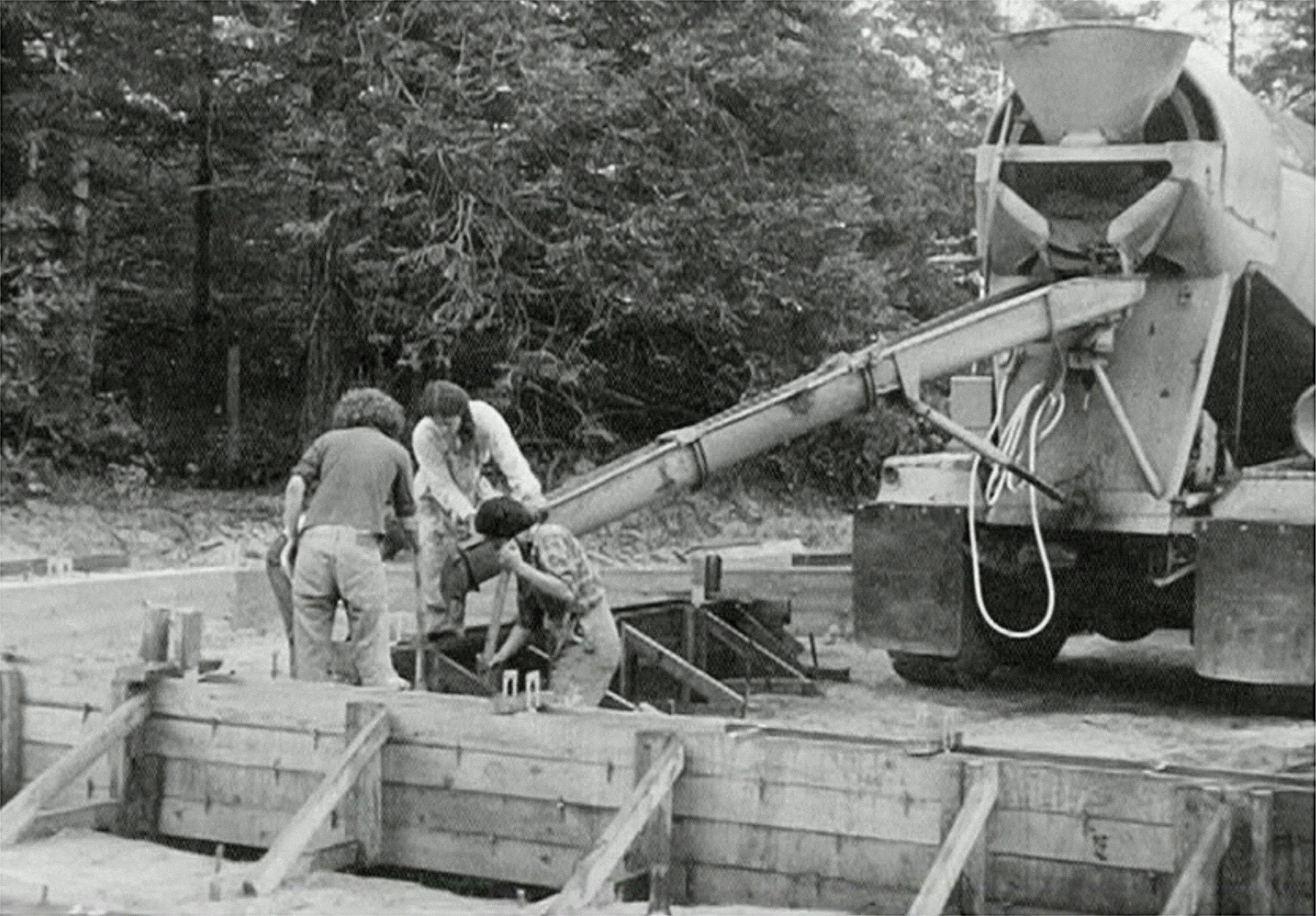
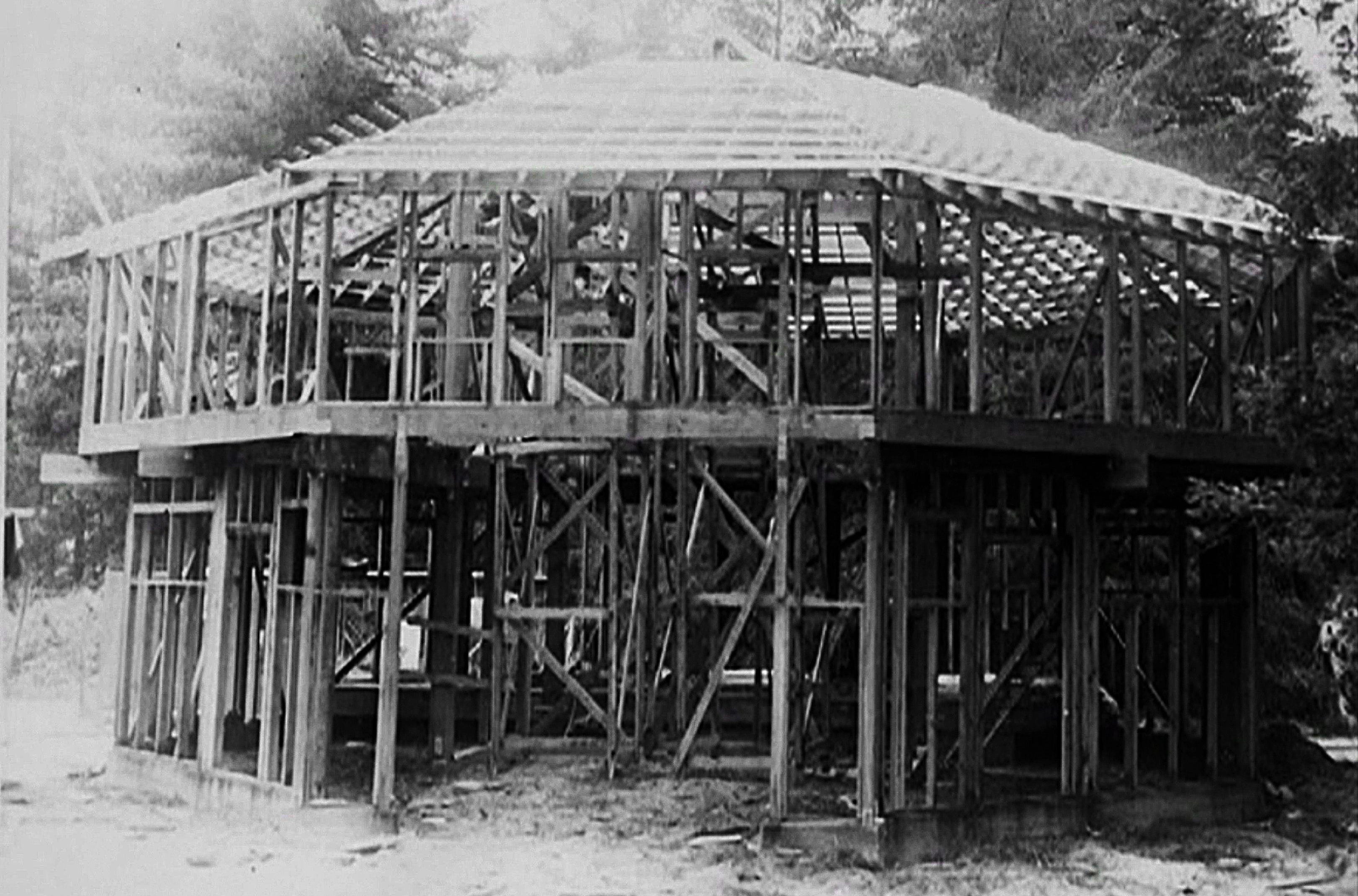
“The most dramatic moment in the process came on the day they poured the concrete foundation: over the course of five fast-paced hours, three large concrete trucks arrived in succession and at least eight or nine women were needed to manage the pour before the concrete set. Over the course of the project, a total of sixteen women worked on the barn, rotating the role of supervisor among them. They described the build as ‘an endurance marathon,’ lasting seven months and spanning multiple seasons of extreme weather. In the end, they would sometimes look at the beams in place and wonder how they got there, despite having done all the work themselves.”
Thank you, Lloyd for bringing this to light. I've lived in California most of my life and I too, did not know about these remarkable women and their wonderful barn.