


Over the past year or so, I’ve had on my journalism hat and been investigating the Environmental Action Committee (EAC) of West Marin, prompted by their petitions to the California Fish and Game Commission to increase restrictions on some six-plus miles of our coast that will make some of our local fishing (and gathering) illegal.
It’s a very tangled issue where we — the vast majority of locals and businesses — are opposed to the EAC’s attempted interference in our lives. (Bolinas is a famously green, self-reliant town that is a significant producer of vegetables and fish in the San Francisco Bay Area.)
The EAC Duxbury Reef Petition Now Before The California Fish and Game Commission (CFGC)
It’s a tangled mess, but here are the salient facts.
Duxbury Reef is already a State Marine Conservation Area (SMCA).
The petition, which will be decided upon by the California Fish and Game Commission (CDFGC) on October 13-16, 2026, would expand the present area greatly. It would ban taking shellfish (mussels), gathering seaweed north of Agate Beach (both already banned at Agate Beach), and potentially ban fishing. (The EAC says they want to protect fishing, but we don’t believe them; read between the lines and see for yourself.)
The “clarifying language” they advocate will make it virtually impossible to fish from shore or boat. They are still pushing for a no-take reserve, but going through the back door — typical of their slippery tactics.
I doubt if many members of the EAC have ever gone north of Agate Beach and seen the mussel beds, which are massive and healthy and have provided food for families relying on coastal food — going back to Coast Miwok times.
There is Nothing Wrong With Duxbury Reef
The EAC submitted a petition to CDFG with no site-specific verified scientific evidence that Duxbury Reef is ecologically degraded or that current protections are failing. Comprehensive and widely available data from the University of California, Santa Cruz, of a long-term intertidal monitoring site at the center of the conservation area, was omitted. This 20-year study shows a thriving and stable ecosystem, with no documented collapse.
And I can tell you this from personal observation — I’m a 3rd generation California fisherman (sport, not commercial) — and have fished on the reef for over 50 years, and the reef has never looked healthier. Fisherman Josh Churchman (who’s been fishing here for almost 60 years) says “The ocean is healthy right now.” Rob Knowles, whose family has been in Bolinas for 150 years, knows the reef better than anyone and attests to its present good health.

I am not advocating for an unregulated coast. I am calling for rules addressing demonstrated problems.
The True Guardians of Duxbury Reef
We are the guardians, not elite outsiders. By “we,” I mean all the locals, all the visitors, all the people who fish in Bolinas.
If the EAC or any of the commissioners would venture around the point, to the area north of Agate Beach — the area in which they want to ban shellfish harvesting and seaweed gathering — they would see a huge and healthy bed of mussels, which has been a source of food and is living proof of our respect for the natural world. It’s already heavily regulated and thriving.
Has anybody asked the Coast Miwoks — who harvested sustainably (and even raised clams) on the reef for centuries — what they think of the EAC petition?
Over 100 Local Businesses Oppose the EAC Petition
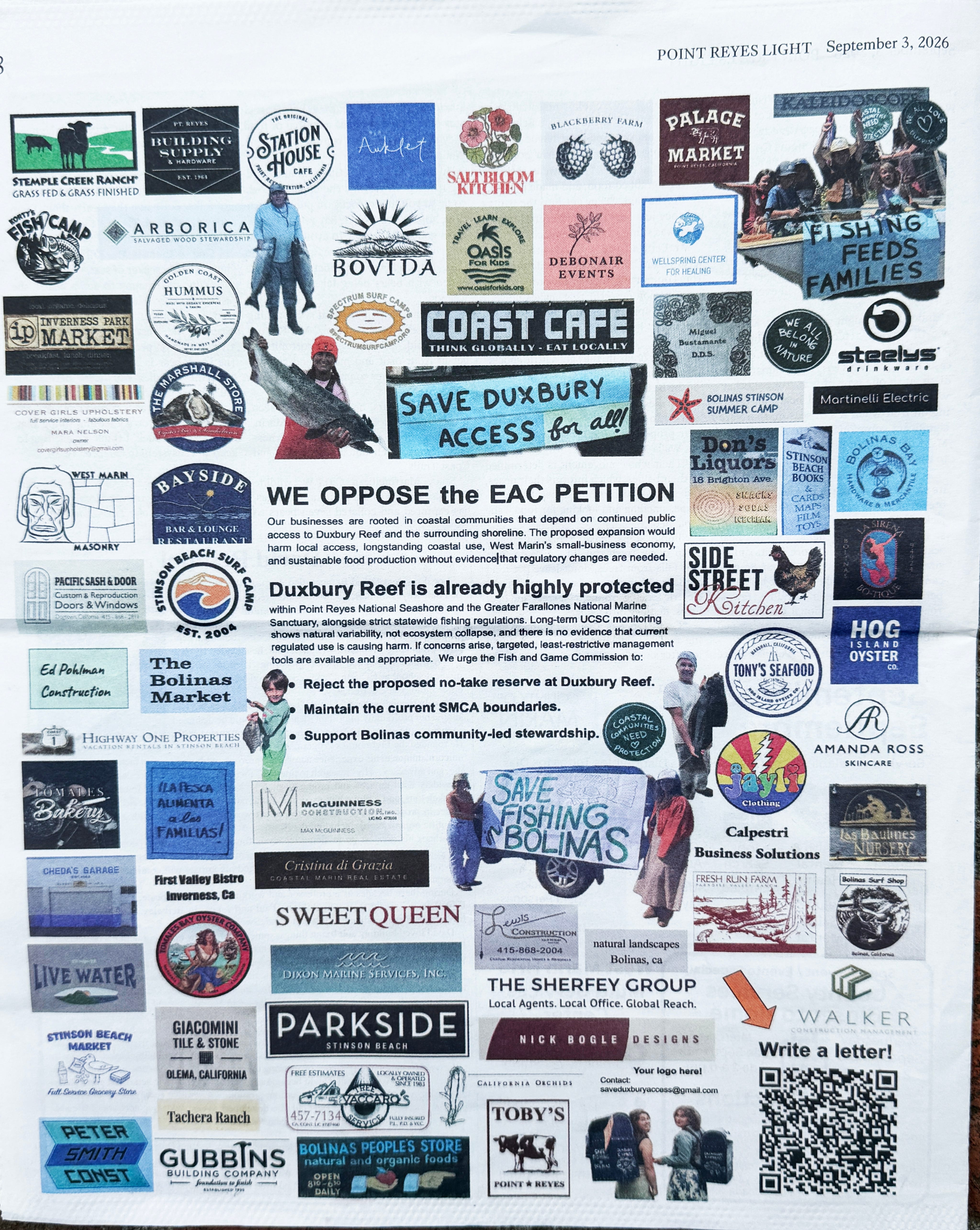
What Can You Do? (Time is of the Essence; Letters in by October 8th)
Write:
gavin.newsom@gov.ca.gov
fgc@fgc.ca.gov
COPCpublic@resources.ca.gov
Subject: Please Oppose Duxbury Reef Petition 2023-32MPA in Full
Suggested wording; put in your own words as much as possible:
Dear Governor Newsom, Members of the Ocean Protection Council, and Fish and Game Commissioners,
Please oppose Duxbury Reef Petition 2023-32MPA in full, including its proposed boundary expansions. I support protecting our coast through conservation that respects public access, local livelihoods, and coastal traditions.
Just like the Point Reyes ranches, Duxbury is about more than a place. It is about food, livelihoods, traditions, and people’s connection to the coast. This is an opportunity to protect nature without pushing coastal communities out.
[Share your connection to Duxbury Reef and how this proposal could affect you, your family, or your community.]
Before restricting access further, the state should demonstrate why additional restrictions are necessary using site-specific evidence and meaningfully involve the people affected. Please deny this petition and support collaborative approaches that protect both marine life and responsible access.
Sincerely, [Your name] [Your city or address]
Early Environmentalism
I was around when environmentalism was born (on a large scale). I was an editor on the Whole Earth Catalog and witnessed firsthand the many countercultural changes of the ’60s. Not just environmentalism, but organic farming, owner-building, political activism, civil rights, women’s liberation, gay rights, free speech, non-Christian religions, a host of other things, and yes — sex, drugs and rock ‘n’ roll.

These concepts were not new, but they were seized upon and brought to the fore by the largest population group in American history — the baby boomers — as hopeful guidelines for a new world.
Environmentalism was real then. The first Earth Day was in 1970.
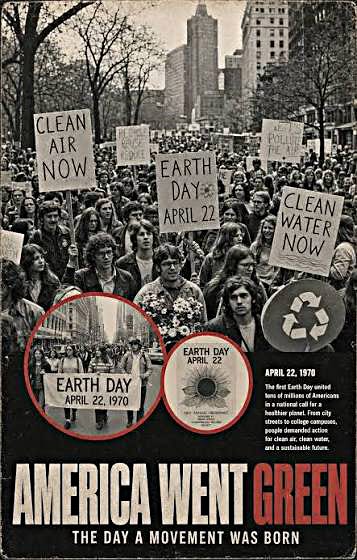
But as the years have passed, business interests have seen an opportunity: They have formed groups and are calling themselves environmentalists.
This is quite different from the sincere environmentalism the ’60s and ’70s. It’s shocking, and — guess what — it’s nationwide.
I’ve been gathering information on this issue — elite environmentalists closing down local food production and eliminating local workers’ jobs and homes in favor of their concept of “wilderness" — for maybe a year. And learned that these “environmental” organizations are actually well-funded businesses.
And — can we talk? — I find myself in over my head, partly due to my age, partly due to my non-linear brain pattern, and partly because I have so much else going on in my life right now.
I have piles of printouts, articles, graphics and other information on the subject, in addition to 37 email folders with saved information. I don’t feel I can organize all this into the article or series of articles that the subject deserves. I need help.
Seeking an Investigative Reporter
It’s a national story that I believe worthy of publication in media such as The New Yorker, The Atlantic, Mother Jones, The Intercept, Pro Publica, etc.
Matt Bond of the All Waters Protection and Access Commission came up with the following phrase on the phone the other day, which is both accurate if you understand what’s going on (statewide and nationally), and a possible title for an article:
The Environmental Industrial Complex
What’s happening in our small town is indicative of an undocumented and frequently under-the-radar coordination in California by various groups that purport to be environmentalists — who are trying to take over management of the state’s resources. Look but don’t touch. Eliminate local food production so you can drive your car out into the country to observe “wilderness,” but don’t go fishing or hunting or gathering. It’s now “scenic landscape.” Urban Recreation.
If you are a reporter, and interested, contact me. I will be glad to pass along an enormous amount of information on the subject.
Deja vu: Orville Schell published a book called The Town That Fought To Save Itself in 1976, when young people in Bolinas staged a recall election and stopped the town from adopting a plan for large scale suburbanization, construction of a big marina, and a heliport. Here we have The Town That Fought To Save Itself Again.

“Environmentalists” Shutting Down Local Food Production
I’ve watched the Environmental Action Committee of West Marin from the sidelines for too many years. In the name of environmental protection, they have helped eliminate major West Marin suppliers of local organic food, and played a major role in terminating local jobs and forcing generally low-income people out of their homes. Now they are threatening our local fishing rights.
Here is some of the damage they’ve done in West Marin in closing down local food production:
OYSTERS
The Drake’s Bay Oyster Company was producing 400-500,000 pounds of organic protein per year. No feeding, no plowing, no fertilizers or insecticides — and the oysters helped purify the water.
The farm’s lease had expired, but in 2009, Congress gave the Secretary of Interior “discretionary 10-year renewal authority” and Senator Dianne Feinstein encouraged the Secretary (Salazar) to do so.
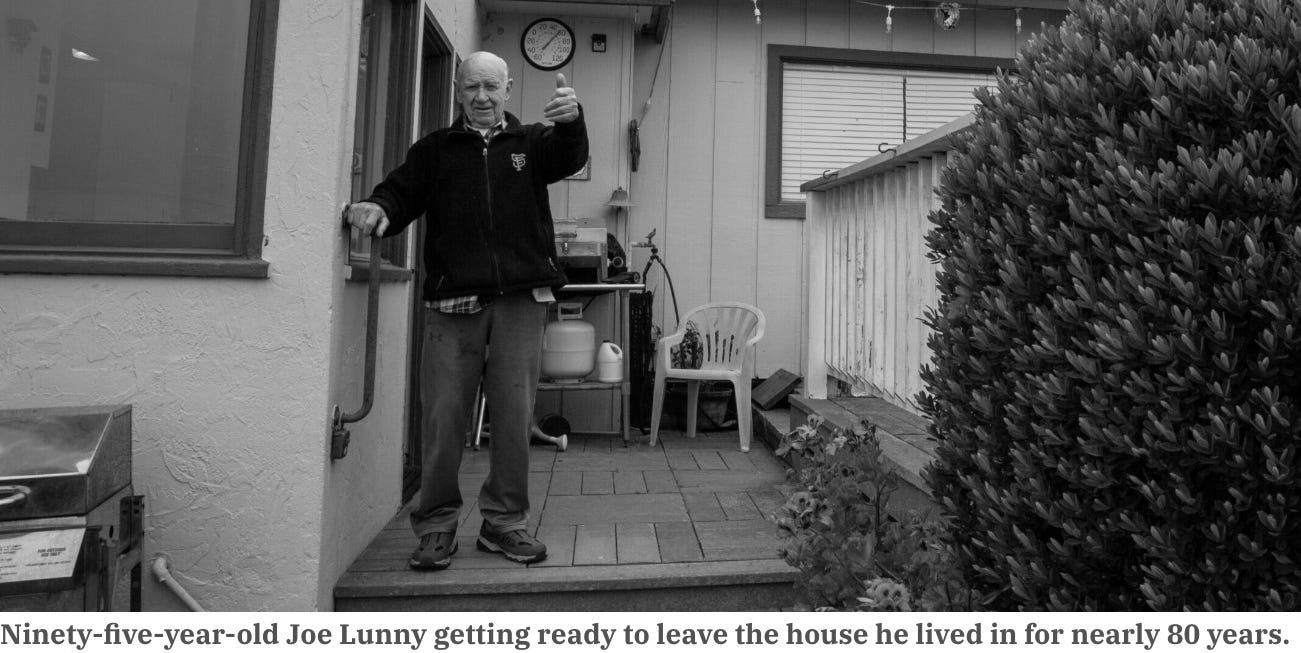
BTW, the Lunnys spent hundreds of thousands of dollars cleaning up the mess left by the farm’s former operators.
The EAC went all in on alleging damage caused by the oyster farm. They claimed harbor seal disturbance, eelgrass damage, “disturbance and damage” to the estero’s wildlife and habitats, encouragement of invasive species, water pollution, and motorboat usage. None of this was accurate.
The EAC did everything in its power to see that the renewal was denied — which it was.
A half-ton of organic protein per year formerly produced in West Marin: gone. In the 12 years since it’s been closed, that’s over 200 tons of protein!
POINT REYES RANCHES
BEEF
There were about 1400 head of cattle on eight Point Reyes ranches. Live weight per steer: average 1400 pounds, producing 1000 pounds of grass-fed beef, which, when trimmed and packaged, was about 500 pounds per head. 1400 times 500= 700,000 pounds of beef a year produced on local grass.
Three quarters of a million pounds of organic protein per year formerly produced on West Marin grass: gone
DAIRY
There were about 3300 dairy cows on the peninsula, each producing an average of 10 gallons of milk per day.That’s 33,000 gallons of milk per day, or 12 million gallons of per year.
Reduce that figure by half because about half of the feed for dairy animals was imported, and you have:
Six million gallons of grass-fed organic milk per year formerly produced in West Marin: gone
This is the opposite of environmentalism. 500,000 pounds of oysters, 3/4 of a million pounds of beef, 6 million gallons of milk every year— all eliminated due to actions by the Environmental Action Committee of West Marin and affiliates.
JOBS AND HOMES
The EAC and affiliates played major roles in eliminating jobs and homes for over 130 people between the oyster farm and the ranches.
Here’s an excerpt from an LA Times article by By Jessica Garrison, March 21, 2025, titled “Treasured California dairies to close. Point Reyes locals say it’s conservation gone mad”
“Why would anyone want to destroy one of the most preeminent areas for organic farming in the country in the name of the environment?
What’s more, the closing of the historic dairies means not just that legacy families and their cows will have to leave, but so will many dairy workers and ranch hands who have lived on the peninsula for decades. An entire community, many of them low income and Latino, are poised to lose their jobs and homes in one fell swoop.…”
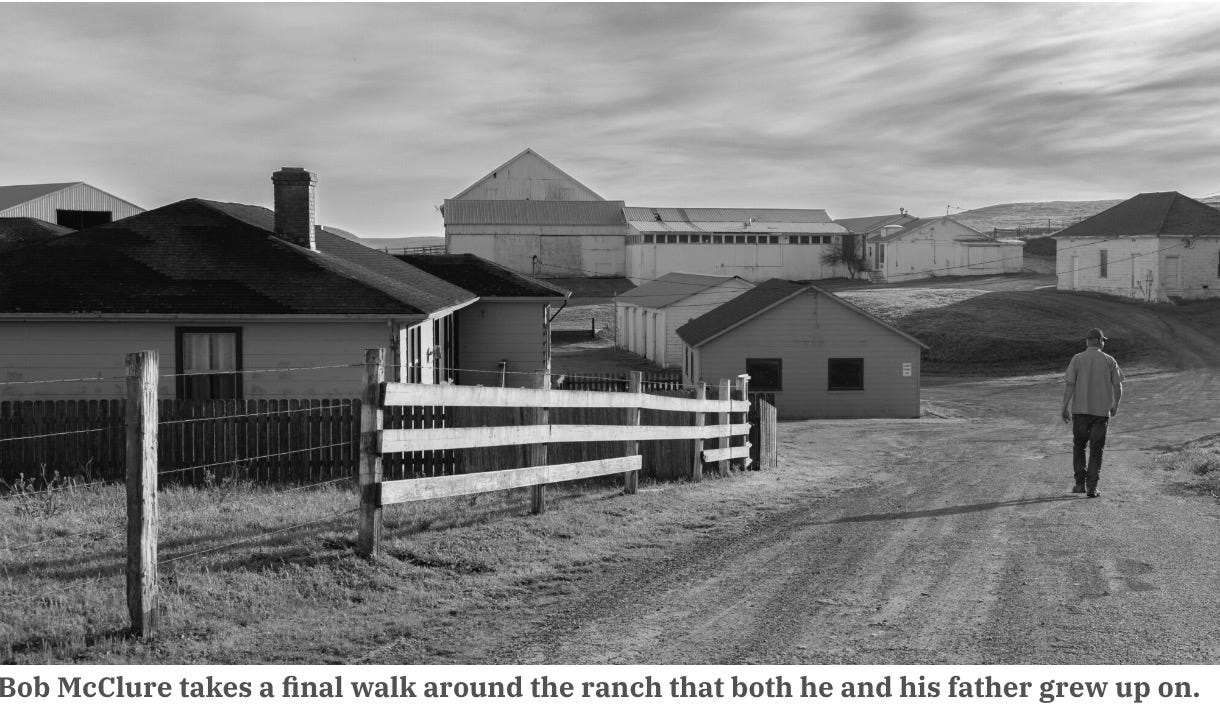
On April 9, 2026, the Point Reyes Light, our Pulitzer Prize-winning local newspaper, ran a poignant photo essay titled “The Last Year” by David Mackie on the destruction of not only the ranches, but a way of life for over 100 people by a contingent of elitist environmental organizations. It was heartbreaking.
And yes, the ranchers got buyout payments, but:
1, It wasn’t nearly enough to buy a comparable ranch anywhere in Marin County
They settled because, according to The Point Reyes Seashore Ranchers Association, it let them “…avoid an even more disruptive, uncertain, protracted, and less favorable outcome…” They took the buyout rather than gambling on losing outright legally and getting nothing.
Note To EAC Contributors
I know good people who have done so, who haven’t seen under the EAC’s smokescreen, or realize the damage they are doing to local food production, fishing rights, and to people’s jobs and homes.
What they are doing is the opposite of environmentalism.
If you’re a contributor, I urge you to do your own research to see if you really want to contribute to this group’s agenda.
Our Local Group: Save Duxbury Access (SDA)
Save Duxbury Access is a grassroots group of Bolinas residents who believe in protecting Duxbury Reef while keeping access open for fishing (both commercial and recreational), tightly regulated shellfish and kelp gathering, surfer access, tidepooling, and reef educational programs. Protecting access ensures that our children will nurture a connection with nature and continue our longstanding tradition of responsible stewardship in Bolinas, California.
Email: saveduxburyaccess@gmail.com
Instagram: https://www.instagram.com/save.duxbury.access/

The State of My Stack
To tell the truth, I’d rather be posting on positive matters. I have a backlog of wonderful things to tell people about, and I haven’t yet hit my stride on Substack. So I’m posting this overall picture of our town’s ongoing battle and, as well, doing an Instagram post asking people to write the California Fish and Game Commission and Governor Newsom, which must be done soon. Then I’ll get back to the positive, exciting stuff I see going on in the world.
BTW, I’m not gonna get involved in an endless comment-and-response morass here. I’m broadcasting my findings and then getting on with my preferred role as communicator of good stuff going on in the world.
Thank you for writing this Lloyd